AIM Inundated
Imagining Life After Land
Pavilion of the Republic of Nauru
61st International Art Exhibition, La Biennale di Venezia
AIM Inundated
Imagining Life After Land
Commissioning authority: Ministry of National Heritage, Culture, and Tourism, Republic of Nauru
Chief curator: Khaled Ramadan
Associate curators: Camilla Boemio, Stefano Cagol
Artists: Kauw Tsitsi (Nauru), CPS – Khaled Ramadan (Denmark) & Alfredo Cramerotti (Qatar), Patricia Jacomella Bonola (Switzerland), Tedo Rekhviashvili (Georgia), Sylvia Grace Borda (Canada), Ron Laboray (United States), Dorian Batycka (Poland), Khaled Hafez (Egypt), Iv Toshain (Austria), Stefano Cagol (Italy)
Venue: Spazio Castello 3683, Calle Bosello 3683, Castello – Venice
May 9 – November 22, 2026
The Republic di Nauru presents the project AIM Inundated, Imagining Life After Land at the 61st International Art Exhibition – La Biennale di Venezia, curated by Khaled Ramadan. Located in Spazio Castello 3683, the collective exhibition presents Nauru – the world’s smallest island nation – as an early and universal example of loss, adaptation, and resilience, a warning and guide for a shared future.
Marking Nauru’s first participation to the 61st International Art Exhibition – La Biennale di Venezia, the Pavilion positions the world’s smallest island nation as a site where the long-term consequences of global economic and political decisions have been materially lived, and thresholds have already been crossed. Once perceived as a remote or marginal territory, Nauru is reframed as both a universal warning and a crucial guide for a shared future.
Situated at the convergence of rising sea levels, environmental exhaustion, and the enduring legacies of colonial extractivism, Nauru stands as one of the most impacted sites. The present moment of Nauru cannot be divorced from its extractive history. Decades of intensive phosphate mining transformed the island’s landscape and economy, leaving behind a terrain marked by ecological depletion, erosion, compromised sovereignty, and geopolitical marginalisation. A century of extraction in Nauru demonstrates how resource demand can dismantle both ecological and socio-cultural systems, leading to long-term instability, and how environmental loss is systematically produced through global systems of extraction, governance, and uneven responsibility.
The Pavilion positions Nauru as both a specific territory and an emblematic site of planetary transformation. It is a conceptual study of disappearance resisting spectacle and catastrophe imagery, and understanding it not only in terms of physical land loss but also as the erosion of cultural continuity, ecological knowledge, systems of meaning, and political agency. Through this lens, inundation becomes a framework for examining how environmental change reconfigures identity, memory, nationhood, and sovereignty, while also reshaping the parameters through which futures are imagined. Furthermore, the framework of Venice – a city historically shaped by water and increasingly defined by environmental vulnerability – establishes a dialogue between different geographies of risk, foregrounding shared exposure.
Info
Site: nauru-biennalevenezia.com
Instagram: @nauru_biennale_venezia
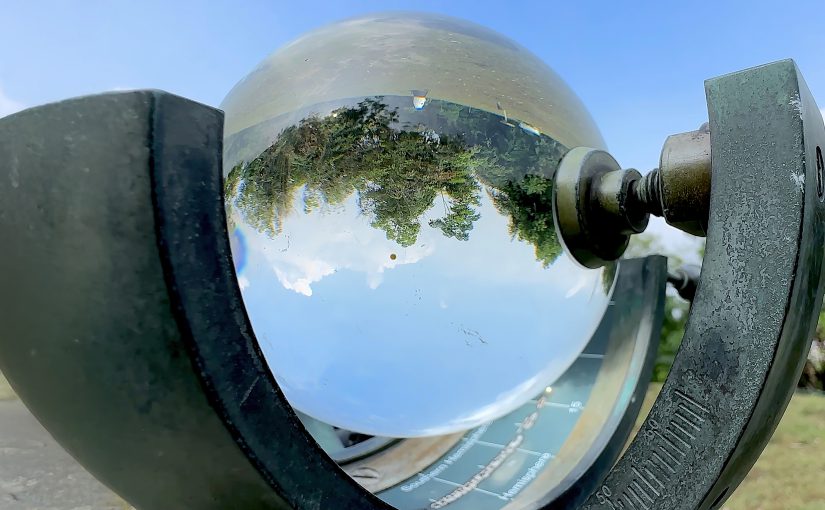
Kauw Tsitsi, Sand Glass Ball Game, 2025, site-specific installation, song lyrics and images, environmental dimensions. Courtesy of the artist.